Should I buy a house with a horizontal foundation crack? It depends on two things: has the wall moved, and has the cause been fixed? The same goes for a house with bowing basement walls. You want both answers before your conditions come off.
Our foundation inspection page explains when people in Winnipeg call an engineer and what that visit is for.
Quick Summary
What matters most is whether the wall has moved, because a crack on its own tells you only part of the story. Make your offer conditional on the inspections you need, ask the seller what they know in writing, and then decide with the facts in hand.
Why Do Manitoba Buyers Worry About Foundations?
They have good reason. The Manitoba Securities Commission's home buyer handbook says structure and foundation problems are the most common cause for concern between buyers and sellers here. It tells buyers to look into it as part of the purchase.
If the crack runs sideways, our post on when a horizontal crack is worth worrying about explains what it can mean and how to track it.
What Should You Check at the Showing?
One visit won't tell you if a wall is safe, but it can show you the warning signs. A home inspectors' group, ASHI, says the amount the wall has moved is often what sets a small crack apart from a big problem.
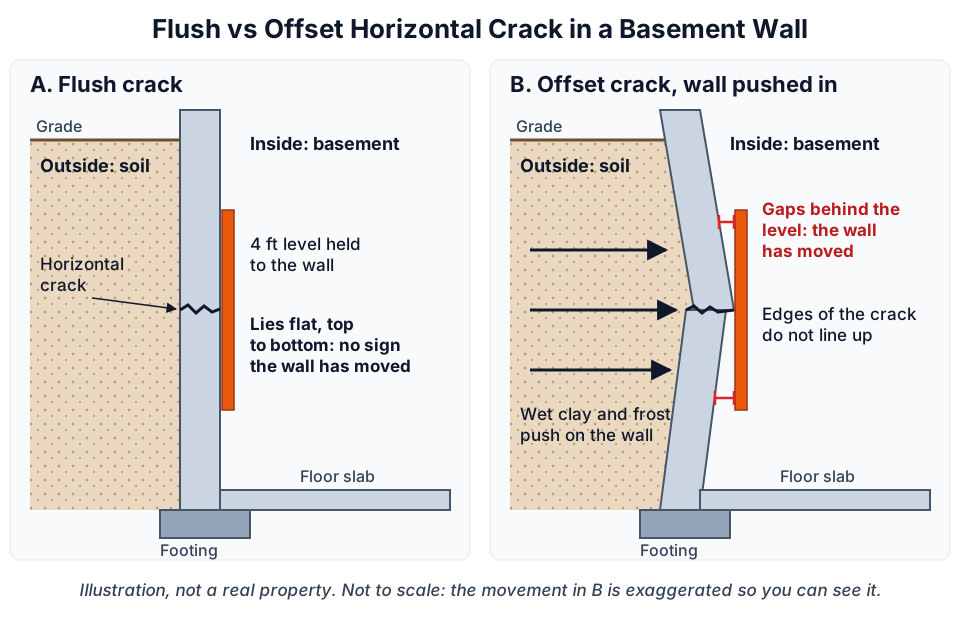
- Is the crack flush or offset? ASHI says wall movement is often measured with a level 4 feet or longer, or a plumb bob. If one side of the crack sits farther in than the other, the wall has moved.
- Does the wall lean in? ASHI says movement of 1/2 inch or more, with a crack over 1/8 inch wide, needs to be dealt with.
- Is there more than one crack? ASHI says a horizontal crack with step or vertical cracks points to a problem. So do several horizontal cracks stacked above each other.
- Is there a fresh patch? On a buyer's forum, one person asked what a coat of epoxy over a crack was hiding. Ask when it was done and why.
- Can you see the wall at all? A finished basement can hide the foundation. Note any walls you could not see.
Who Should You Call, and in What Order?
Start with a home inspection. The Government of Canada's consumer office says a home inspection is a visual check that does not open up walls. It covers structure, including the foundation.
If the inspector flags movement, bring in an engineer. The Manitoba handbook lists "an engineering inspection to your satisfaction" as a common condition, and says an engineer can report on how sound the structure is.
A contractor quote can come after that. Our wall bracing page covers the usual fixes for a wall that has moved.
What Should You Ask the Seller?
Ask what they know, in writing. The Manitoba handbook says a seller can fill out a Seller's Voluntary Property Condition Statement, and you can make your offer depend on it.
Good questions to ask:
- When did the crack first show up?
- Has it grown, or let water in?
- Was it ever repaired? By whom, and is there paperwork or a warranty?
Ask about water, too. The handbook suggests asking the seller for a warranty about past problems such as water seepage. ASHI says wet soil, poor drainage and frost cause horizontal cracks, so water is part of the story.
Can You Use the Crack to Negotiate?
You can ask. In Manitoba, the handbook says an offer can be accepted, or sent back as a counter offer, and either side can say no. A seller does not have to agree to a lower price.
On forums, a few buyers say they would rather get money off the price than have the seller do the repair. That way they choose who does the work. Your salesperson or lawyer can help with the wording.
What If the Wall Was Already Braced?
A past repair is not a reason to walk away on its own. Ask for the paperwork from the job and have the wall looked at anyway. Our post on bowing basement wall repair costs explains what changes the price of that work.
Buyers also ask if a repaired wall will scare off the next buyer. Keep every paper from the job. It is the proof you will want to show later.
Don't Miss the Deadline
The Manitoba offer form says a condition must be met or waived in writing before its deadline. If no notice is given in time, the condition counts as not met, and the deal ends. Book your inspections early in the condition period.
FAQ
Is a Horizontal Foundation Crack Always a Deal Breaker?
No. ASHI says horizontal cracks in block walls should always be taken seriously, but movement is the key. A crack with no movement and a fixed cause is a different house from a wall that is pushing in.
Do I Need an Inspector or an Engineer?
Often both. The inspector looks first, and if they flag movement, an engineer can judge the structure.
Will the Seller Tell Me About the Crack?
Not always. The Manitoba handbook says "buyer beware" applies to most homes here. A seller must disclose a hidden defect they know about if it is a health or safety risk or makes the home unusable, so ask about anything else you want to know.
Does a Braced Wall Hurt Resale?
Buyers do ask about it. Paperwork from the job helps you answer that question when you sell.
Ready to Look at the House?
Book the inspections before your conditions come off. Our foundation inspection page explains when people in Winnipeg call an engineer.